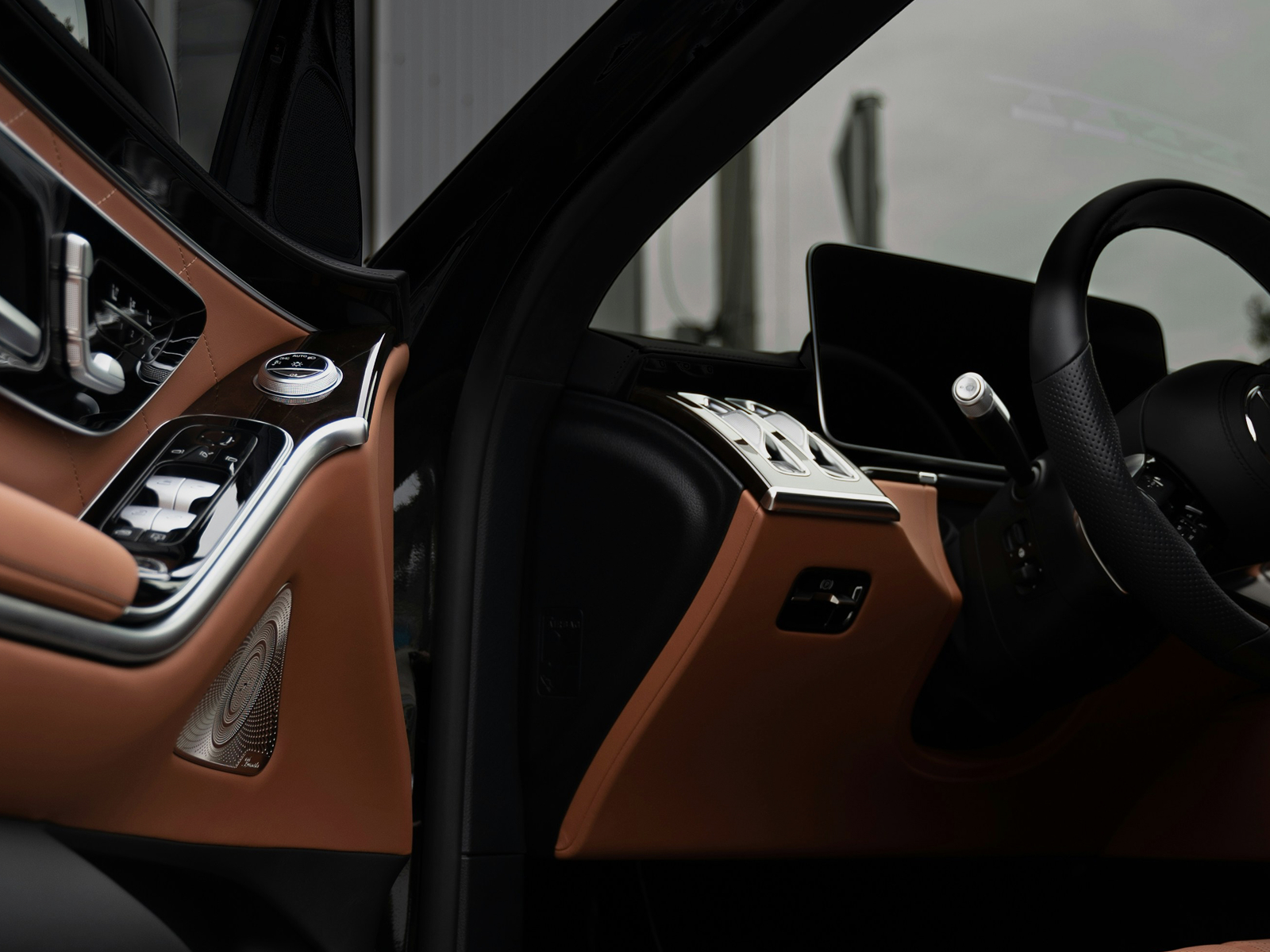
Few products receive the level of attention given to a great car. Engineering, proportion, materials, sound, interaction and performance can be developed over years. Details most customers will never consciously notice are considered because, collectively, they change how the car feels. That attention creates expectation.
Spend a significant amount on a vehicle and you don't suddenly stop noticing details when you step out of it. The website you used to explore it, the conversation with the retailer, the specification process, the handover and what happens when the car needs servicing all become part of your perception of the brand.
Yet there can be a curious disconnect between the sophistication of the product and the experience surrounding it.
The car can feel exceptional while buying or owning it feels surprisingly ordinary.
The product sets the standard
This is particularly interesting in prestige automotive because the product itself establishes such a high benchmark.
A customer can see the quality of a material, feel the weight of a switch or experience the precision of an interaction. Hundreds of decisions contribute to an impression that may ultimately be expressed very simply: this feels special.
The surrounding experience is judged against that same standard.
McKinsey's research into the luxury-car market found that the emotional relationship with the product remains extremely important. In its survey of luxury-car buyers and prospects, 86% cited enjoyment of driving as a main motivation for purchasing a luxury vehicle.
That emotional component matters because the purchase isn't purely functional. A customer may have rational requirements, but desire, anticipation, identity and enjoyment are part of the decision too.
The experience surrounding the car should understand both sides.
A configuration tool has to work, but it should also make choosing the car enjoyable. A showroom needs to provide information, but it should also heighten anticipation. A handover needs to transfer keys and explain controls, but reducing it to those functions misses what the moment represents.
Good experience design understands the practical requirement without losing the emotional one.
Digital should increase desire, not introduce friction
For many customers, the relationship with a vehicle now begins on a screen.
Research, comparison, configuration, finance, availability and initial contact can all happen before somebody enters a physical retail environment. McKinsey has described automotive purchasing as increasingly omnichannel, with customers moving between digital and physical interactions rather than treating them as separate journeys.
That makes digital experience much more than a supporting channel.
The website is part of the showroom.
This doesn't mean recreating a physical retail experience online. Digital has different strengths. It can allow someone to explore at their own pace, compare options, understand technology, configure possibilities and return repeatedly as their thinking develops.
The design challenge is deciding what somebody needs at each stage.
Prestige vehicles can be extraordinarily complex products. Models, derivatives, options, packages, materials, technology and finance create enormous amounts of information. Giving customers access to everything is relatively easy. Helping them make sense of it is much harder.
The best digital experiences make complexity feel manageable without removing the richness of the choice.
The handover deserves more thought
There is a moment in the automotive journey that I think is particularly interesting: collection.
By the time someone arrives to take delivery, they may have spent months considering the purchase. They have researched, configured, waited and imagined what ownership will be like.
Then comes the moment when it becomes theirs.
From an operational perspective, handover involves paperwork, vehicle familiarisation, final checks and keys. From the customer's perspective, it is the culmination of anticipation.
Those are very different descriptions of the same event.
That makes handover an unusually valuable experience-design opportunity. The environment, pace, presentation of the vehicle, amount of information introduced, photography, small physical details and the way the customer is welcomed can all influence how that moment is remembered.
More does not necessarily make it better.
A carefully considered experience may involve removing things rather than adding them. Less paperwork in the room. Less unnecessary ceremony. Less information delivered all at once. More time with the vehicle. More understanding of what matters to that particular customer.
The objective isn't theatre for the sake of theatre.
It is recognising that some moments carry more emotional weight than others and designing accordingly.
Ownership is where the promise gets tested
The sale isn't the end of the experience. In many ways, it is where the longer relationship begins.
Servicing, maintenance, roadside support, software, apps, communications, events and interactions with retailers all become part of ownership. And these moments often occur when the emotional context is very different from the excitement of buying the car.
McKinsey's research highlights the opportunity here. In its study of luxury automotive customers, only 55% reported being fully satisfied with their current maintenance experience.
That gap is significant.
Brands spend enormous amounts creating desire before purchase, but a comparatively mundane service interaction can have a disproportionate effect on the relationship afterwards.
The details matter here too. How easy is it to arrange servicing? Does the customer understand what will happen? Is communication proactive? Is the replacement vehicle appropriate? Can they see progress without having to chase? Does collection feel organised? Does the brand recognise the history of the relationship?
None of those things have much to do with horsepower.
They have everything to do with ownership.
Personal doesn't have to mean complicated
Prestige customers increasingly expect personalisation, but there is a danger of confusing personalisation with adding more.
True personalisation can be much quieter.
Remembering how somebody prefers to communicate. Understanding the vehicles they own. Knowing whether they want a detailed explanation or simply want something handled. Recognising that one customer enjoys invitations and events while another values discretion above everything else.
Technology and data can help, but the experience should rarely feel as though it has been designed around a database.
The most sophisticated service often feels remarkably simple because complexity is being managed somewhere the customer cannot see.
This is one of the reasons I think automotive has so much potential for experience design. The industry combines extraordinary physical products with complex digital systems, retail environments, human relationships and long ownership cycles.
The challenge is not a lack of touchpoints.
It is making them feel like parts of the same relationship.
Design the relationship, not just the moments
A customer doesn't experience an organisation chart.
They don't particularly care whether the website belongs to digital, the showroom to retail, an app to product, communications to marketing and servicing to aftersales.
They experience one brand.
That makes consistency less about ensuring everything looks identical and more about ensuring the same principles survive as the context changes.
A website and a showroom shouldn't behave in exactly the same way. A service notification shouldn't sound like an advertising campaign. A handover shouldn't feel like an app.
But there should be something recognisable connecting them: the same level of clarity, consideration, confidence and attention.
That is where creative direction becomes useful beyond communications. It provides a point of view against which very different experiences can be judged.
Does this feel like us?
Does it respect the customer?
Does it make something clearer?
Does it deserve to be here?
Those questions can be surprisingly powerful.
The experience has to earn the badge
Prestige automotive brands already understand the value of detail better than almost any other industry.
The opportunity is to apply that same obsession beyond the vehicle.
Because a customer may spend hundreds or thousands of hours with the car, but their perception of the brand is also being shaped in dozens of smaller interactions around it.
Some will be exciting. Others will be mundane. A few will happen when something has gone wrong.
They all count.
The car will always be at the centre of the relationship. It should be. But when the product is exceptional, everything surrounding it has to work harder to deserve the association.
The car may be the reason someone arrives. The experience is part of the reason they return.
Gareth.