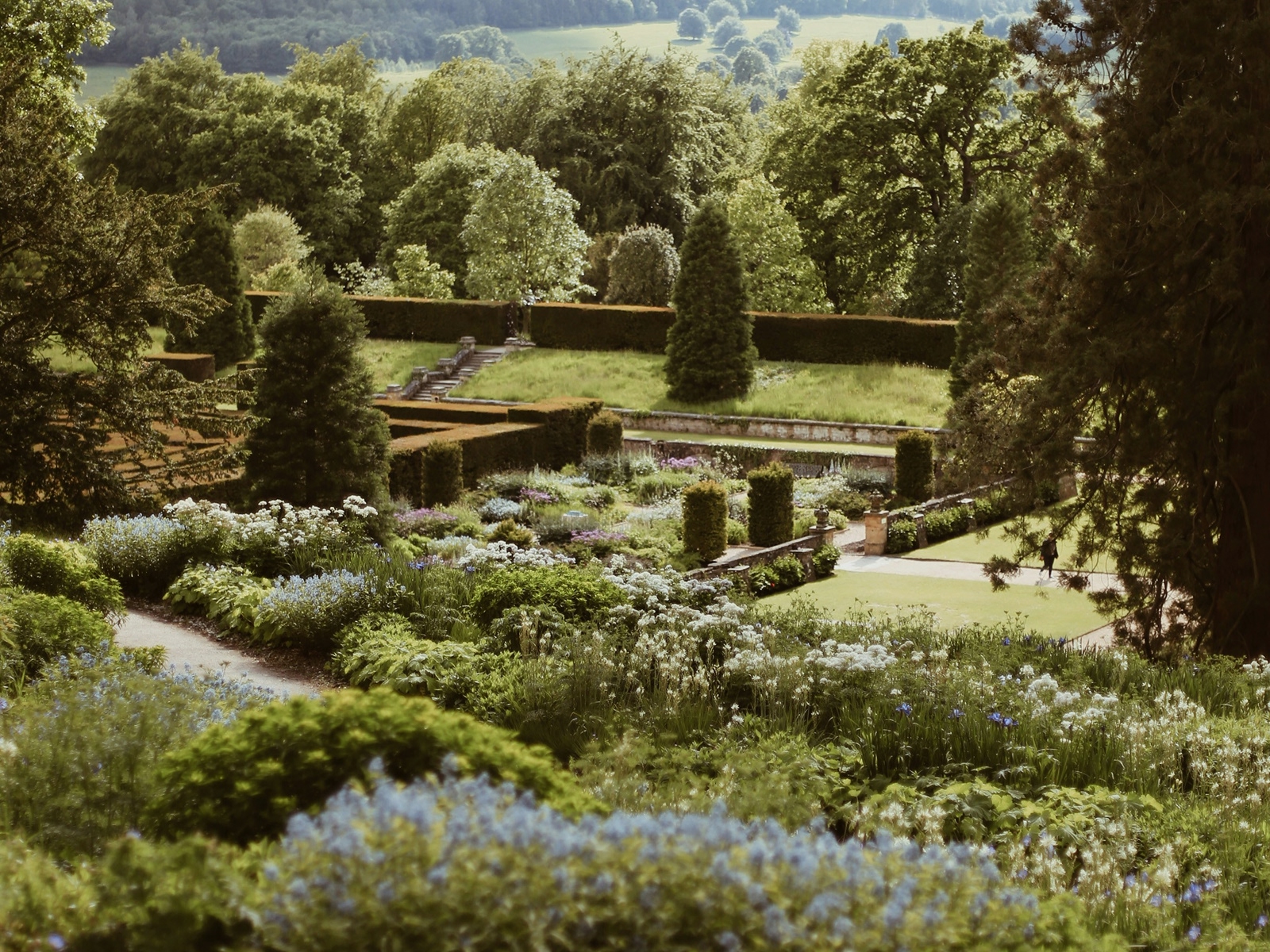
There is something difficult to define about places that feel genuinely distinctive. You notice it in an old estate, a particular stretch of countryside, a hotel that seems inseparable from its surroundings or a building that could only really exist where it does. It isn't necessarily grandeur, age or architectural significance. More often, it is the accumulation of things that belong together: architecture, landscape, materials, history, people, language, weather, traditions and the way a place has changed over time. We tend to call this a sense of place, and for businesses built around a physical location, I think it is one of the most valuable things they possess.
It is also surprisingly easy to overlook when creating a brand. When somebody asks for a new identity, there is an understandable desire to begin creating: the logo, typography, colours, photography and all the other things we traditionally associate with identity. For an estate or destination, I would start somewhere else. Before deciding what should be introduced, I want to understand what is already there.
Start with the place, not the identity
Historic England talks about understanding the existing character and significance of a place as an important foundation for successful placemaking. That includes not only individual buildings, but patterns of landscape, routes, materials and the way places have evolved. I think much the same principle can be applied to brand and experience design. Before introducing a new visual language, it is worth understanding the one the place has already developed.
That might mean looking at the stone used in its buildings, the proportions of its architecture, colours occurring naturally in the landscape, old maps and documents, existing signage, local language, working buildings and the relationship between formal spaces and those that have been allowed to evolve more naturally. None of those things necessarily needs to appear literally in an identity. In fact, translating them too literally can quickly become pastiche. Their value is that they give you something much more useful than a moodboard: they begin to establish a point of view that belongs specifically to that place.
This is where I think the difference between creating an identity and revealing an identity becomes interesting. The former begins with what we might add; the latter begins with what is worth noticing. For a place with genuine history and character, there is usually far more material available than any designer could invent.
Heritage isn't a creative style
There is an obvious temptation when working with estates and historic places to make something look historic. A crest, a serif typeface, an established date, muted colours, perhaps an illustration of the house. Sometimes those things are entirely appropriate, but there is a danger when heritage becomes a visual effect rather than something genuinely understood.
Heritage is much richer than an aesthetic. Historic England's work on the social value of heritage connects it with people's attachment to places, their sense of identity and their pride in where they live or spend time. For an estate, that history might stretch back hundreds of years, but it also includes what happened last year and what is happening today. The people maintaining the landscape matter. So do tenants, local communities, crafts, conservation work, hospitality, events, farming and the new businesses finding a home there.
If the brand only looks backwards, it can accidentally turn a living place into a museum of itself. I find the more interesting question is how history informs what happens next. An estate can respect its past without constantly performing it. In fact, there is often greater confidence in allowing historic character to sit alongside contemporary typography, photography, digital experiences and communications without feeling the need to make everything appear old.
The result should feel as though it belongs to the place, not as though somebody has applied an idea of heritage to it.
A complicated estate needs a simple idea
Many country estates are surprisingly complex businesses. Residential and commercial property can sit alongside agriculture, forestry, hospitality, events, weddings, sporting activities, retail, food production, conservation and tourism. Over time, each activity can acquire its own identity, website, signage and communications until the estate begins to look like a collection of unrelated businesses that happen to share the same land.
The answer isn't necessarily to put the same logo on everything. A restaurant doesn't need to look like a property business, and holiday accommodation doesn't need to communicate in the same way as a farming enterprise. Trying to force everything into a rigid visual system can remove precisely the individuality that makes those experiences interesting.
What matters more is establishing the idea that connects them. That might be stewardship, a particular relationship with the landscape, a standard of hospitality, an approach to craft or conservation, or a philosophy about how the estate should evolve. Once that central idea is clear, individual parts of the estate can have considerably more freedom because consistency comes from shared principles rather than identical execution.
This is also where the developer or estate brand itself becomes valuable. It provides context. Someone staying for a weekend, attending an event or renting a property may encounter very different expressions of the organisation, but over time they begin to understand that those experiences come from the same place and are informed by the same standards.
The place should be more recognisable than the branding
One of the strongest indicators of a successful place brand, for me, is that you begin to recognise it without seeing the logo. The photography has a particular character. The writing sounds like it belongs there. Printed material has a certain restraint. Signs feel appropriate to the landscape. Digital experiences share the same sensibility without trying to imitate something historic. Individually these decisions may be subtle, but collectively they create recognition.
Photography is particularly important because generic images of beautiful countryside can be attractive while saying remarkably little. They could belong to hundreds of places. The details that initially appear less spectacular are often far more distinctive: a particular wall, a working yard, an old tree, a material used throughout the buildings, the changing landscape through the seasons or the relationship between architecture and the land around it.
The same is true of language. Phrases such as “escape to the countryside” or “where heritage meets contemporary luxury” have become so familiar that they could describe almost anywhere. The better question is why this countryside matters. What happens here that doesn't happen elsewhere? What has shaped it? Who looks after it? What should somebody notice when they arrive?
Specificity is often more luxurious than embellishment because it demonstrates that there is something real underneath the presentation.
Stewardship gives heritage a future
Country estates have an unusual relationship with time. Decisions made today can affect landscapes, buildings and communities for generations, which makes stewardship much more than an appealing word for an About page. Savills' research into heritage property makes a related point: historic buildings require planned stewardship, careful intervention and viable future uses if they are going to survive, with their value extending beyond architecture or finance into craftsmanship, memory and local identity.
That creates much more interesting material for communication than endlessly reminding people how old an estate is. How is the landscape being managed? Which buildings are being restored or given new uses? What is being grown or produced? Which crafts are being sustained? How is biodiversity being considered? What new businesses are being introduced? What decisions are being made now that someone else may inherit decades from today?
When those stories become part of the brand, heritage becomes active rather than decorative. It also creates richer material for photography, editorial content, publications and digital storytelling because the estate no longer has to keep repeating its history to prove that it has one. Past, present and future become parts of the same narrative.
Digital should reveal more, not compete with the place
There can sometimes be a tension between heritage and digital experience, as though introducing technology somehow diminishes authenticity. I don't think it has to. Used well, digital can help people understand a place in ways that would otherwise be difficult, provided it knows when to get out of the way.
The National Trust's HistoryScapes project is an interesting example. It uses location-aware digital storytelling to reveal historical narratives as visitors physically move through landscapes. The interesting part isn't the technology itself, but the principle behind it: the digital layer exists to deepen someone's relationship with the real place rather than becoming the attraction in its own right.
The same thinking can apply much more broadly. A website can connect accommodation with walks, food, events and history. Maps can make a complicated estate easier to understand. Editorial content can reveal stories hidden behind buildings and landscapes. Digital interpretation can provide context without filling the physical environment with information. The screen doesn't need to become the experience; sometimes its role is simply to help somebody experience what is already there more deeply.
Distinctiveness is usually already there
There is enormous pressure on brands to be distinctive. Entire creative processes are built around finding a visual territory competitors don't occupy or creating an idea that can somehow be owned. Places have an advantage because no competitor has precisely the same landscape, architecture, history, people and accumulated stories.
That doesn't automatically produce a distinctive brand. Those things still have to be noticed, understood and edited. But it means the raw material is already there. The job isn't necessarily to invent a personality for the place; it is to understand the personality it already has and express it with enough clarity and confidence that other people can recognise it too.
For me, that requires restraint. It means resisting generic ideas of what a country estate, rural hotel or destination is supposed to look like. It means spending enough time with the place to find the things that could not have come from somewhere else, and then allowing those things to influence photography, language, typography, digital experience, print and the physical environment.
When that happens, the brand doesn't sit on top of the place as another layer of communication. It becomes a way of helping people notice what was distinctive all along.
A sense of place isn't something a brand creates. It's something the brand learns how to reveal.
Gareth.