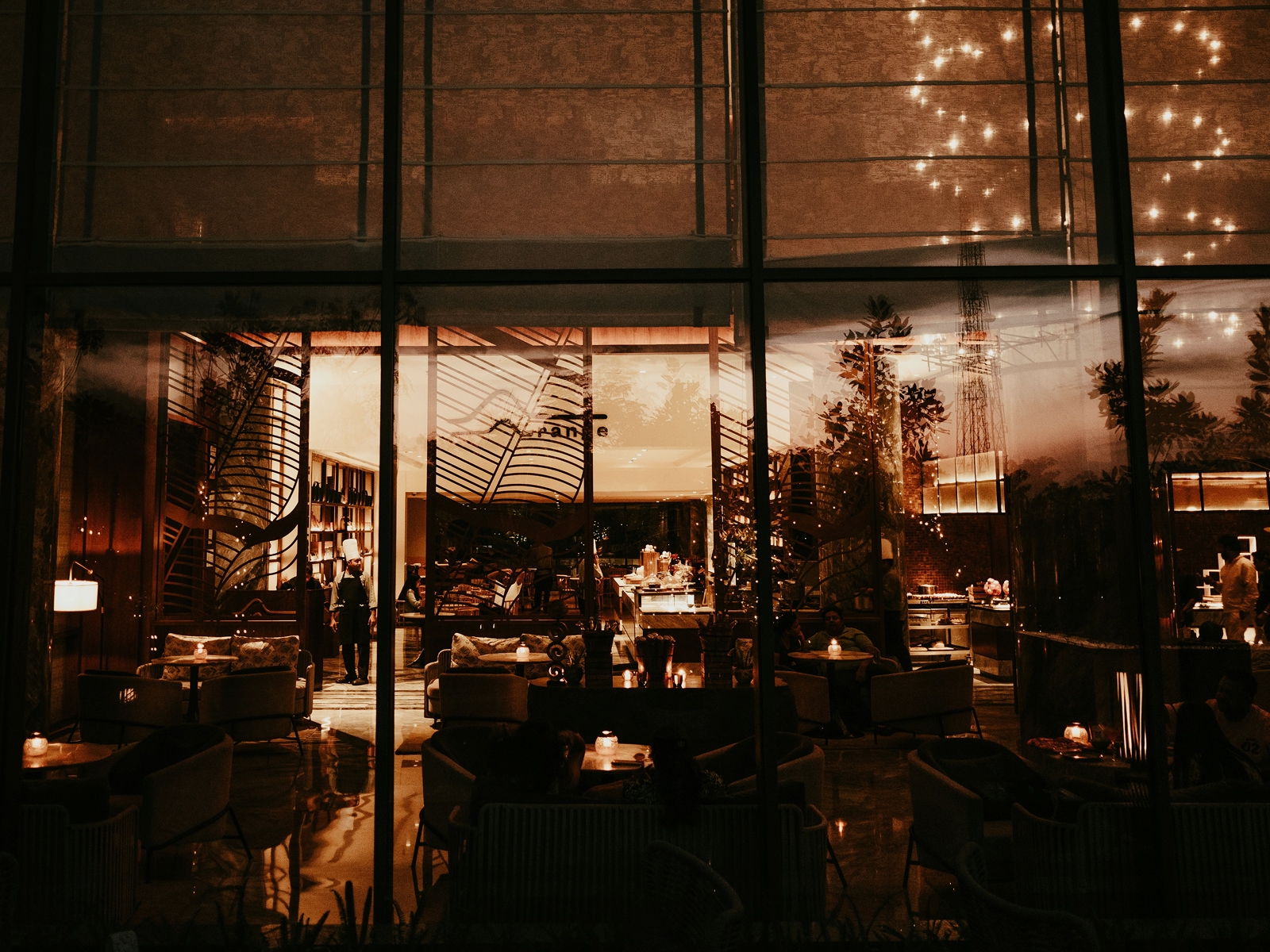
There is a particular feeling when you enter a great restaurant or hotel and immediately sense that somebody has thought about what happens next. You haven't eaten anything, stayed in the room or experienced much of the service, yet an impression is already forming through the welcome, the pace of the space, the lighting, the sound, the language somebody uses or simply the feeling that everything is under control.
Even that isn't really the beginning. You probably encountered the business hours, days or months earlier through a recommendation, photograph, review, social post, website or menu. You made a reservation, received a confirmation and perhaps had further communication before arriving. Each interaction contributed something to the expectation you carried through the door.
Hospitality is particularly interesting from an experience-design perspective because the thing being bought is difficult to separate from the way it is delivered. The food, room or building matters enormously, but so do anticipation, service, atmosphere, timing and memory. The product and the experience are intertwined.
Anticipation has value
Booking a significant restaurant or hotel isn't simply an administrative action. It creates something to look forward to, and the period between reservation and arrival can become part of the pleasure of the experience itself. This gives the interactions during that period more importance than they might initially appear to deserve.
A website can establish atmosphere without attempting to explain everything. A reservation journey can make somebody feel confident rather than processed. A confirmation can provide useful information without sounding transactional. Pre-arrival communication can remove uncertainty while preserving some sense of discovery.
The balance is subtle because too little information creates friction while too much can flatten the experience before it has happened. The best hospitality brands understand what needs to be revealed, what needs to be useful and what is better left until somebody arrives.
This also changes how we think about brand. The identity and photography might initially create desire, but the reservation system immediately tests whether the promise extends beyond presentation. A beautiful brand followed by an awkward booking process creates a contradiction before the customer has even visited.
Beautiful surroundings are only part of the proposition
Hospitality has always understood the power of environment. Architecture, interiors, furniture, tableware, menus, uniforms, music, scent and lighting can create an extraordinarily complete world, and the best places develop a recognisable identity without needing to put a logo on everything.
The difficulty is that physical beauty has become easier to reproduce. Customers encounter sophisticated interiors constantly through travel, social media and an increasingly design-conscious hospitality market. Beautiful spaces still matter, but appearance alone becomes less effective as a source of lasting differentiation when everyone has access to the same references.
What is considerably harder to reproduce is how a place makes somebody feel. That happens through hundreds of decisions, many of which aren't obviously design decisions at all: how someone is welcomed, whether staff understand when to interrupt and when not to, how a mistake is handled, the confidence with which something is explained, the pace of the experience and whether the customer feels recognised rather than processed.
This is why I think service should be considered part of the brand rather than something that happens after the branding has finished. The person greeting a guest is expressing the brand just as surely as the typography on the menu.
Consistency doesn't require a script
Hospitality also exposes one of the limitations of thinking about consistency purely in visual terms. A business can have immaculate brand guidelines and still deliver an inconsistent experience because the most important interactions depend on people exercising judgement.
The instinctive response can be to create more rules. Scripts, procedures and service standards are useful because they establish expectations, but taken too far they can make the experience feel mechanical. Genuine hospitality needs enough structure to maintain quality and enough freedom for somebody to respond intelligently to the person in front of them.
Consistency, in that sense, doesn't mean every customer receiving precisely the same interaction. It can mean consistently demonstrating the same values through different interactions. One guest may appreciate a detailed conversation; another would rather be left alone. The quality lies in recognising the difference.
That principle has implications for design well beyond hospitality. Strong experience systems don't prescribe every possible interaction. They establish principles that help people make better decisions when situations inevitably fall outside the script.
Personalisation should feel like recognition
There is a similar distinction with personalisation. As businesses collect more customer information, it becomes technically possible to tailor increasing numbers of interactions, but hospitality provides a useful test of whether that personalisation is actually valuable: does it feel thoughtful, or does it merely demonstrate that the business has data about you?
Remembering a preferred room, dietary requirement or how somebody likes to communicate can remove effort and make an established relationship feel genuinely recognised. Remembering an anniversary can be meaningful in the right circumstances. None of those things works simply because the information exists in a system. Somebody still has to understand when and how to use it.
The best personalisation therefore tends to be quiet. The customer experiences the benefit without being shown the machinery behind it. Information reaches the right person at the right moment and enables a better decision, rather than becoming an excuse to demonstrate how much the organisation knows.
This is closely related to a broader characteristic of premium experiences: much of the work required to create them should remain invisible.
Not every detail should demand attention
Exceptional hospitality is full of detail, but the customer shouldn't necessarily notice all of it. They shouldn't need to admire the booking system because it was effortless. They shouldn't have to think about wayfinding because they instinctively understood where to go. They shouldn't notice that the timing between interactions has been carefully considered.
Good hospitality removes reasons to think about the mechanics of the experience, even when considerable complexity is required behind the scenes to make that possible. It is similar to the relationship between front and back of house: what appears calm and effortless to the guest can depend on enormous coordination elsewhere.
The same principle applies to visual and digital design. A premium experience doesn't need every touchpoint to announce how premium it is. Sometimes the most confident decision is to remove something, simplify an interface, shorten a message, reduce a choice or allow a material to speak for itself. Restraint can communicate confidence in ways decoration cannot.
That doesn't mean the experience should be devoid of memorable moments. It means those moments have more value when they emerge from an otherwise coherent and effortless experience rather than competing constantly for attention.
What remains is the memory
Hospitality has another characteristic that makes it particularly interesting: much of what somebody buys disappears. The meal is eaten, the evening ends and the hotel room belongs to somebody else the following day. What remains is memory, and memory is selective.
People rarely remember every component of an evening or stay. They remember moments: the first impression, an unexpected gesture, a conversation, a particular dish, a view, something that went wrong and the way it was handled. Those moments can be deliberately supported, but trying to manufacture them constantly is likely to have the opposite effect. If everything is designed to be memorable, very little is.
The more useful approach is to understand which parts of the journey carry emotional weight and make sure the experience gives people the opportunity to handle those moments exceptionally well. That means considering what happens between the obvious deliverables: between discovering the restaurant and making a reservation, between booking and arriving, between entering and being greeted, and between something going wrong and somebody deciding how to respond.
This is why the lessons from hospitality extend far beyond restaurants and hotels. Any business selling a high-value product or service can learn something from the way great hospitality treats anticipation, service, judgement and detail. People experience the whole relationship, not the departments or deliverables responsible for creating it, and what they remember is often less about any individual touchpoint than the feeling those touchpoints created together.
The table may be where the evening happens. The experience begins long before you sit down.
Gareth.