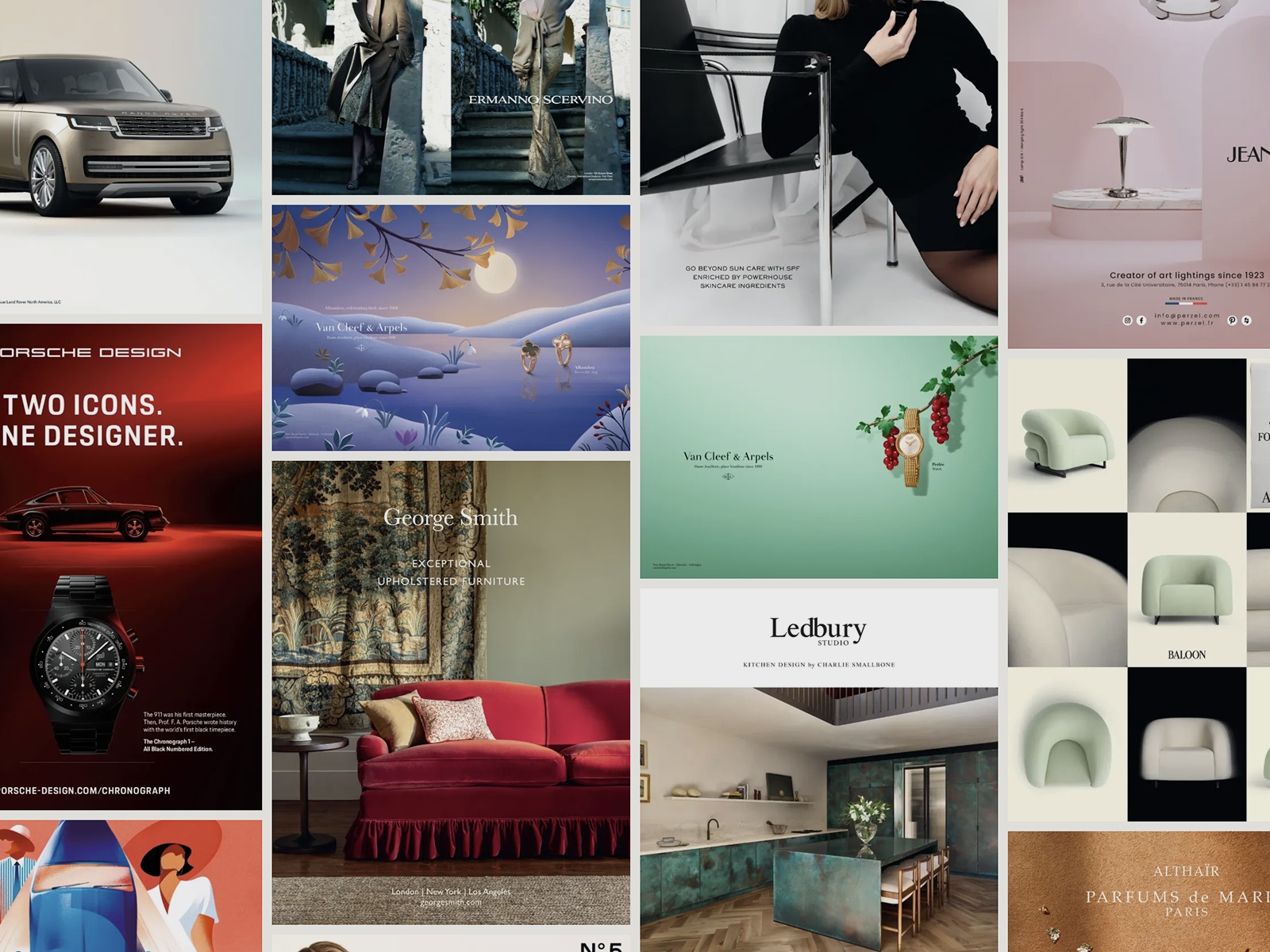
With the right approach, businesses of any size can achieve beautifully executed, distinctive advertising that commands attention, communicates with confidence and makes every pound work harder.
There is something particularly satisfying about a beautifully executed print advertisement. The relationship between the photography, typography, composition and surrounding space feels effortless, the message is immediately understood, and the impression it leaves lasts considerably longer than the few seconds spent looking at it. We often associate this level of creative execution with the world's most recognisable brands, whose advertising appears in prestigious publications and is supported by substantial marketing budgets. Yet the qualities that make these advertisements so effective are not exclusive to businesses with enormous resources. They come from understanding an audience, recognising what makes a brand distinctive and knowing how to express that difference with clarity, confidence and visual intelligence. A generous budget can open up more possibilities, certainly, but it cannot replace the experience and judgement required to make the right creative decisions.
For businesses advertising in monthly or quarterly magazines, specialist publications and regional titles, the investment in a single page can be significant. That page may sit alongside advertisements from established luxury brands, national businesses and competitors with considerably larger marketing departments, all seeking the attention of the same readership. It might also represent someone's first encounter with the business, which makes the responsibility of the creative work greater than simply filling the space attractively. An effective advertisement needs to establish credibility, communicate something meaningful and give the reader a compelling reason to remember the name behind it. Achieving that requires an understanding of the publication, its audience, the wider competitive landscape and the impression the business wants to create. The design is the visible expression of those decisions, but the thinking that precedes it is where much of the value lies.
Experience changes the economics of good design.
Having spent a significant part of my career working across print design, advertising and creative direction, I've come to appreciate how much can be achieved when the right experience is brought into a project from the outset. A strong advertisement doesn't automatically require an elaborate production process, an extensive creative team or weeks of presentations and approvals. It requires an informed conversation about the business, an understanding of the opportunity and the ability to identify a compelling creative direction without unnecessary complication. Working directly with an experienced creative director can make that process both more personal and more efficient, with strategy, art direction, design and production knowledge brought together rather than distributed across multiple departments. Decisions can be made quickly, ideas can be explored openly and the work can progress without losing its original intent through layers of interpretation.
That efficiency should never be confused with cutting corners. The value of experience lies partly in knowing where to invest time and attention, which details will elevate the finished advertisement and which additions are unlikely to improve it. A beautifully art-directed photograph, a distinctive typographic treatment or a particularly well-judged headline may do far more for a campaign than a complicated concept requiring substantial production expenditure. Equally, there are occasions when commissioning new photography, refining a brand's visual language or developing a more ambitious creative idea is entirely justified. The important thing is being able to distinguish between the two and advise accordingly. For a business with a limited budget, this can mean achieving a level of quality that might previously have felt beyond reach. For a more established brand, it offers the reassurance that resources are being directed towards the things that genuinely strengthen the work.
The confidence to say less.
One of the recurring challenges in print advertising is the temptation to communicate everything at once. When a business has invested in a full page, it's understandable that there may be pressure to include multiple messages, a comprehensive list of services, several photographs and every possible reason to make contact. The result, however, can be an advertisement that asks too much of its audience and leaves very little impression. Some of the most memorable advertising succeeds through restraint, allowing a single idea to take centre stage and giving the reader the opportunity to engage with it. Strong photography, precise language, confident typography and a thoughtful use of space can communicate an extraordinary amount without overwhelming the page. This is particularly powerful in premium markets, where the way something is presented often says as much about a business as the product or service itself.
The same principles are equally valuable to younger businesses and those entering a competitive market for the first time. An emerging brand does not need to imitate the scale or visual conventions of an established competitor to appear credible. It needs to understand its own character and communicate it convincingly. Sometimes that means challenging the familiar conventions of a sector; sometimes it means bringing greater refinement and consistency to the materials a business already has. In either case, the objective is not to disguise the size of the organisation or make a modest budget appear extravagant, but to create advertising that feels appropriate to the ambition and quality of the business behind it. When the creative direction is right, there is no reason why an independent specialist, a new hospitality venture or a growing property business cannot sit comfortably alongside much larger names within the same publication.
From creative idea to printed page.
Of course, an advertisement must do more than look beautiful. It needs to serve a purpose, whether that's introducing a business to a new audience, reinforcing an established reputation, promoting a particular offering or encouraging an enquiry. Understanding that purpose influences everything from the hierarchy of information to the choice of imagery and the tone of the copy. The publication itself is part of the equation, too. Its readership, editorial style, physical format and surrounding content all affect how the advertisement will be experienced. A campaign developed for a specialist automotive magazine may call for a different visual approach from one appearing in a regional lifestyle publication or a premium property title, even when the underlying brand remains the same. Good creative direction recognises those differences while maintaining a coherent identity across every placement.
There is also an important practical dimension to producing exceptional print advertising, one that can easily be overlooked when the focus is entirely on what appears on screen. Image resolution, colour reproduction, typography, artwork specifications and the characteristics of the printed material all influence the final result. An advertisement that looks immaculate on a monitor must retain that quality when reproduced on paper, often at a specific size and under the technical constraints of a publication's production process. My experience spans both the creative development and the practical preparation of artwork for print, allowing those considerations to inform the work from the beginning rather than becoming problems at the point of delivery. It is a part of the process I genuinely enjoy: taking an initial idea, refining every element and seeing it become a finished piece of communication that is ready to go to press.
The same ambition, whatever the business.
A specialist automotive business, an independent restaurant, a premium residential developer and an ambitious start-up may have very different budgets, audiences and commercial priorities, but each deserves advertising that reflects the quality of what it offers. My approach begins with understanding the business and the opportunity in front of it, rather than prescribing a particular process or level of expenditure. We can explore what the advertisement needs to achieve, review the publication and its audience, assess the assets already available and establish where creative effort will have the greatest impact. In some cases, a fresh approach to the existing photography and messaging may be all that's required to transform an advertisement. In others, a new creative concept or a more distinctive visual direction may offer a far stronger return on the investment. The objective is to reach the right solution efficiently, without compromising the craft or attention to detail that gives the finished work its quality.
Working independently also means that the person you speak to about the opportunity is the person shaping the creative direction and delivering the work. There is a directness to that relationship which I believe is valuable, particularly when deadlines are approaching or a business needs experienced guidance without committing to the overheads of a traditional agency. It allows the work to remain responsive, collaborative and proportionate to the project, while maintaining the standards expected of a premium brand. I don't believe exceptional creative work should be reserved for organisations able to support an elaborate agency structure, nor do I believe efficiency should come at the expense of originality, refinement or care. The two can sit very comfortably together when the right experience is involved.
If you're preparing to advertise in a monthly or quarterly publication, have an existing campaign that no longer reflects the quality of your business, or simply want to explore what might be possible with the budget available, a conversation is often the best place to begin. You don't need a fully developed brief or an extensive collection of creative assets. Understanding the business, the audience and the opportunity is usually enough to establish a direction and identify what will make the greatest difference. Whether you're commissioning your first advertisement or looking to bring a new level of quality to an established brand's communications, I'd welcome the opportunity to explore it with you.