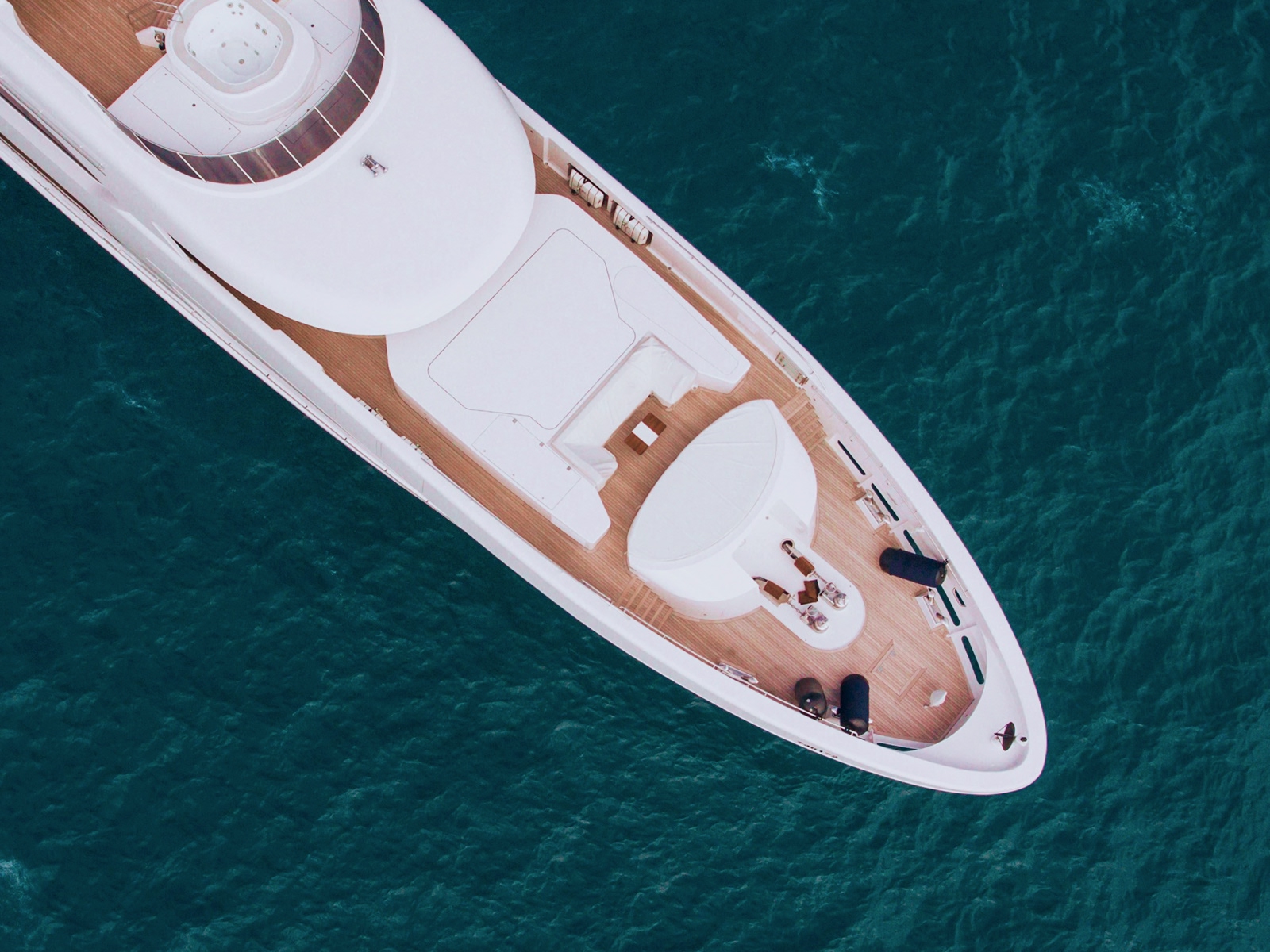
There are few experiences quite as appealing as the idea of spending a week aboard a beautiful yacht. The freedom to explore the Mediterranean at your own pace, wake somewhere entirely different each morning, enjoy extraordinary food in complete privacy and discover places that would be difficult to reach by any other means is a compelling proposition. For those accustomed to travelling exceptionally well, the appeal is obvious.
A yacht offers something that even the finest hotels cannot quite replicate: the opportunity to shape an entire experience around your own preferences, with the people you choose and an extraordinary degree of freedom. It is a world I've always admired, although I should probably admit that my own experience of looking at beautiful yachts currently extends rather further than my experience of owning one.
From a creative and commercial perspective, however, what interests me just as much as the yachts themselves is the way they are presented, discovered and ultimately commissioned. Spend time exploring the charter market and you'll encounter some remarkable vessels, exceptional destinations and businesses offering what should be genuinely memorable experiences. Yet the quality of the communication surrounding those experiences can vary enormously. Beautiful photography is often accompanied by interchangeable descriptions, familiar promises of luxury and digital journeys that feel surprisingly ordinary for a service involving such a significant investment. When several operators offer access to similar vessels, destinations and itineraries, the distinction between them becomes less about what is available and more about how confidently they communicate their expertise, how well they understand their clients and how enjoyable they make the entire experience of arranging a charter.
Selling the experience, not simply the vessel.
A yacht is an extraordinary object, and naturally it deserves to be photographed and presented beautifully. Its design, proportions, accommodation, deck spaces, amenities and performance all matter, particularly to experienced charter clients who know exactly what they're looking for. But specifications alone rarely communicate the experience of being aboard. The difference between a technically impressive vessel and an unforgettable holiday often lies in the things that are much harder to capture in a list of features: the atmosphere created by the crew, the flexibility of the itinerary, the quality of the food, the knowledge of a particular coastline and the pleasure of discovering somewhere that feels entirely your own.
This is where creative direction and storytelling become especially valuable. Rather than relying exclusively on conventional exterior photography and carefully staged cabin interiors, a charter business has the opportunity to communicate the character of the experience. The changing light over a quiet anchorage, breakfast prepared on deck, an evening arrival in a beautiful harbour or the sense of anticipation before setting out for somewhere new can reveal far more about the pleasure of chartering than another photograph of a polished saloon. That doesn't mean every website needs to become an elaborate lifestyle film, or that practical information should be hidden behind atmospheric imagery. It means finding the right balance between inspiration and substance, allowing prospective clients to imagine themselves aboard while providing the confidence and detail they need to make an informed decision.
The strongest charter brands understand that their offering is not simply access to a yacht. It is access to a particular kind of experience, supported by specialist knowledge and personal service. Some clients will value privacy above everything else, while others may be looking for a family holiday that accommodates several generations, an adventurous itinerary with opportunities for diving and watersports, or an occasion that deserves an exceptional setting. A business that understands those motivations can communicate with far greater relevance than one attempting to appeal to everybody through the same collection of familiar images and promises.
When every charter starts to look the same.
One of the challenges facing businesses in established luxury markets is the tendency for visual communication to become remarkably similar. There are understandable reasons for this. Certain colours, photographic styles, typefaces and layouts have become closely associated with premium travel, and they provide a convenient starting point for businesses wanting to communicate a particular level of service. Yet when too many operators draw upon the same references, the result can be a market in which individual businesses become increasingly difficult to distinguish. A beautiful photograph of a superyacht in the Mediterranean may attract attention, but it does little to explain why a client should choose one charter specialist over another.
True differentiation begins before the visual identity is designed. It requires a clear understanding of the business, the clients it serves, the relationships it has developed and the qualities that make its approach genuinely different. Perhaps an operator has exceptional knowledge of the Greek islands, an established network of captains and crew, or particular expertise in arranging charters for families with young children. Another may specialise in adventurous itineraries, discreet private celebrations or clients who want an exceptionally personal service without having to manage the practical arrangements themselves. These are meaningful distinctions, and they should influence everything from the language used on the website to the imagery selected, the structure of the booking journey and the way enquiries are handled.
A distinctive identity needn't be louder or more elaborate than its competitors. In a market where confidence, discretion and personal recommendation matter, an assured visual and verbal identity can be far more effective than one that relies on exaggerated claims or fashionable styling. The objective is to create a recognisable character that feels appropriate to the business and consistent wherever a client encounters it, whether that's through a website, an editorial feature, a beautifully produced charter brochure, a private invitation or a conversation with a member of the team. The strongest brands establish expectations and then reinforce them through the experience they deliver.
The website is the beginning of the charter.
For many prospective clients, the website will be their first meaningful encounter with a charter business. It may be visited following a personal recommendation, discovered through a search for a particular destination or explored after someone has seen a yacht that catches their attention. Whatever brings them there, the digital experience begins shaping their expectations immediately. A slow website, inconsistent photography, unclear information or an unnecessarily complicated enquiry process can introduce doubt long before anyone has spoken to a broker. Conversely, a beautifully designed and intuitive experience can make an unfamiliar business feel established, capable and reassuringly professional.
I find this particularly interesting because the principles of exceptional digital design are not fundamentally different from those of exceptional hospitality. Visitors should feel welcomed, understood and able to find what they need without unnecessary effort. Someone researching their first charter may need an explanation of how the process works, what is typically included, how itineraries are arranged and what questions they should be asking. An experienced client may already know the vessel, destination and dates they want, and simply need an efficient way to establish availability and begin a conversation. The same website must be able to accommodate both without overwhelming one audience or frustrating the other.
This requires more than an attractive homepage. Information architecture, search and filtering, yacht profiles, itinerary content, mobile usability and enquiry forms all contribute to the experience. A visitor should be able to move naturally from inspiration to practical detail, compare relevant options and understand the next step. Yacht photography should be generous and carefully selected, but it should never come at the expense of usability. Technical information should be easy to find without dominating the presentation, and the distinction between a yacht's advertised capacity, its accommodation arrangements and the practical suitability of a particular itinerary should be communicated clearly. The result should feel effortless, even when the underlying information is complex.
Making the booking experience feel exceptional.
The charter enquiry process deserves particular attention because it is the moment when inspiration begins to become a genuine commercial opportunity. In some travel markets, an immediate online booking is exactly what customers want. At the upper end of yacht chartering, however, arrangements can involve vessel availability, cruising areas, seasonal restrictions, crew, provisioning, preferences, additional expenses and a range of other details that benefit from personal guidance. Attempting to force every enquiry through a conventional ecommerce checkout risks reducing a highly individual service to a transaction that feels neither appropriate nor reassuring.
That doesn't mean the process should be unnecessarily slow or opaque. There is considerable scope for intelligent digital systems that make the experience more convenient while preserving the personal relationship. Clear availability information where it can be reliably maintained, carefully designed enquiry forms, saved yacht selections, itinerary preferences and secure document handling can all help clients communicate what they want without repeatedly supplying the same information. Behind the scenes, an effective customer relationship management system can help a brokerage or charter team respond promptly, retain useful preferences, coordinate follow-up conversations and provide continuity between initial enquiry and confirmed booking.
The distinction is between automating the administration and automating the relationship. A client arranging an exceptional holiday should not have to chase basic information or wonder whether an enquiry has been received, but neither should they feel that an expensive and highly personal experience is being managed entirely by a sequence of impersonal emails. The best digital systems support the people delivering the service, giving them more time to offer knowledgeable recommendations, anticipate requirements and build confidence. A beautifully designed enquiry journey, followed by an attentive and well-informed personal response, can establish the character of the entire relationship.
Reaching the next generation of charter clients.
There is another opportunity that I think deserves greater attention: the people who are financially capable of chartering a yacht but have never seriously explored the possibility. Established clients may already have trusted brokers, preferred destinations and a clear understanding of how chartering works. Reaching them can depend heavily on relationships, reputation and recommendation. But there is also a prospective audience of successful business owners, entrepreneurs, professionals and families who enjoy exceptional travel, perhaps already staying in remarkable hotels, renting private villas or occasionally using private aviation, yet regard yacht chartering as something unfamiliar or difficult to access.
For these clients, the barrier may not be affordability so much as uncertainty. They may not know how to begin, whether a yacht is suitable for their family, how much flexibility is possible or what separates a genuinely excellent charter experience from an ordinary one. They may be unsure about pricing structures, crew arrangements, additional expenses or the etiquette of spending a week aboard. None of these questions is unreasonable, yet the language and presentation of the industry can sometimes assume a level of familiarity that newcomers simply don't possess. A business that answers those questions clearly and respectfully has an opportunity to welcome an audience that might otherwise never make an enquiry.
This is where useful editorial content, thoughtful search visibility and intelligent customer journeys can contribute directly to commercial growth. An article explaining what to expect from a first Mediterranean charter, a beautifully photographed guide to travelling with children aboard a yacht or an honest explanation of charter costs can attract people at the earliest stages of exploring the idea. Rather than simply competing for searches involving specific yachts or established charter destinations, operators can become visible when prospective clients are discovering the experience itself. Those visitors may not be ready to book immediately, but a business that helps them understand the possibilities can establish familiarity and trust long before they are ready to commit.
The opportunity isn't to make an exceptional experience appear ordinary or to diminish the sense of occasion that makes it desirable. It is to remove unnecessary uncertainty while preserving the qualities that make chartering special. There is a difference between accessibility and mass-market positioning. A beautifully presented explanation of the process, written with confidence and an appreciation of the reader's intelligence, can make a service feel welcoming without compromising its exclusivity. In many ways, the same principle applies to private aviation, specialist travel and other high-value experiences: the businesses that make their expertise approachable can develop relationships with clients who might otherwise remain outside the market.
The commercial value of better communication.
For charter operators and brokers, the value of stronger branding and digital experiences extends well beyond appearances. Clear positioning can help attract enquiries that are better suited to the business, reducing the time spent responding to people whose expectations or requirements don't align with the service being offered. More useful content can improve the quality of initial conversations, because prospective clients arrive with a better understanding of the experience and the practical decisions involved. A carefully structured enquiry journey can reduce unnecessary administration, while consistent communications can make it easier to maintain relationships with clients who may return year after year.
There are also opportunities to strengthen the relationship beyond the charter itself. A client who has enjoyed an exceptional week aboard may be interested in a different destination the following season, a longer itinerary, a particular vessel or an entirely new kind of experience. Thoughtful follow-up, useful editorial communication and an understanding of previous preferences can make those conversations feel personal rather than promotional. Equally, the way a business communicates with clients who aren't ready to book immediately can influence whether it remains in their thoughts when the opportunity arises. Not every enquiry will result in an immediate charter, but a well-managed relationship may develop into something valuable over time.
This is why I believe creative direction and customer experience should be viewed as connected commercial disciplines rather than separate exercises in presentation. A distinctive brand attracts attention and establishes expectations; compelling photography and storytelling help people imagine the experience; an intuitive website makes exploration enjoyable; effective enquiry and booking systems reduce friction; and thoughtful personal communication gives clients confidence in the people responsible for arranging their time aboard. Each element has a different role, but the commercial value emerges when they work together. A business can invest heavily in attracting visitors, yet lose opportunities through a confusing enquiry process. Equally, an excellent brokerage team may struggle to demonstrate its expertise if its digital presence fails to communicate the quality of the service it provides.
Beyond the screen.
Although digital presence is central to how charter businesses are discovered and evaluated, there is a great deal to be gained from thinking about the complete experience of the brand. The quality of a printed charter proposal, the presentation of a suggested itinerary, the design of a welcome document or the way information is shared before departure can all influence how a client feels about the service. These moments may seem relatively small compared with the yacht itself, but they contribute to the sense that everything has been arranged with care and that the people responsible understand the importance of the occasion.
I have a particular appreciation for businesses that bring the same level of creative attention to these supporting details as they do to their most visible communications. A beautifully produced itinerary can become part of the anticipation of a holiday, while clear and elegant pre-departure information can remove practical concerns without feeling administrative. A carefully art-directed collection of destination photography might inspire a returning client to explore somewhere entirely new. Even the tone of an email or the clarity of a digital confirmation can contribute to the impression of a business that is confident, organised and attentive. These are opportunities for design to improve the experience rather than merely decorate it.
There is also a valuable role for editorial publishing. A charter specialist with exceptional destination knowledge has a wealth of interesting stories available to it, from remarkable anchorages and regional food to architecture, local culture, marine conservation and the people who make particular places worth visiting. Presented through strong writing, original photography and intelligent art direction, that knowledge can become an asset in its own right. A digital Journal, an occasional printed publication or a beautifully produced destination guide can help a business develop a distinctive voice while giving existing and prospective clients something genuinely enjoyable to explore. The aim should always be to create material with value beyond the immediate sale.
A different kind of competitive advantage.
The most interesting opportunities in yacht chartering may not come from acquiring another vessel, adding more destinations or making increasingly ambitious claims about the quality of the service. For some businesses, the greater opportunity could lie in expressing what already makes them exceptional and removing the obstacles that prevent prospective clients from discovering it. A knowledgeable team, strong relationships with owners and captains, excellent destination expertise and a genuine commitment to personal service are valuable qualities, but they cannot influence a client's decision if they remain invisible until after an enquiry has been made.
I would approach that challenge by looking at the business as a whole, beginning with its positioning and the people it most wants to attract, then examining how those ambitions are expressed through identity, communications, digital experience and the practical journey from initial interest to confirmed charter. Sometimes the priority will be a clearer brand and a more distinctive visual presence. Elsewhere, the greatest improvement may come from rethinking the website's structure, creating more compelling editorial content, improving the way enquiries are managed or bringing greater consistency to the communications clients receive throughout their relationship with the business. The right creative investment depends on where the opportunities and frustrations actually lie, rather than assuming every operator needs the same solution.
For established charter businesses, this may be an opportunity to strengthen a reputation that has already been earned through years of exceptional service. For newer operators, it offers a way to establish credibility and communicate a distinctive approach without attempting to imitate the largest names in the market. And for businesses looking to reach clients who have not chartered before, there is the possibility of expanding the audience through clearer communication, better digital discovery and a more welcoming introduction to the experience. None of these opportunities depends upon compromising the exclusivity or personal nature of yacht chartering. If anything, they depend upon understanding those qualities more deeply and expressing them with greater confidence.
The experience begins long before departure.
The lasting appeal of yacht chartering will always be the experience itself: the freedom, privacy, extraordinary locations and pleasure of spending time aboard a remarkable vessel with people whose company you enjoy. No website, brochure or booking system can replace those qualities, nor should it attempt to. But the way a charter business presents itself and guides its clients towards that experience has a significant influence on who discovers it, how confident they feel and whether they choose to begin a relationship.
The businesses that stand out will be those that understand the entire journey, from the first moment of curiosity to the anticipation before departure and the memories that remain afterwards. They will communicate with individuality, make complex arrangements feel straightforward and give clients the reassurance that comes from dealing with people who understand their world. For a service built around freedom and exceptional personal attention, the experience of arranging it should reflect exactly those same qualities.
It's a sector I find particularly compelling because it brings together so many aspects of creative work that I enjoy: distinctive brands, exceptional photography, beautifully presented communications, intelligent digital products and the finer details of customer experience. For yacht charter operators, brokerages and specialist travel businesses exploring how to strengthen their presence, attract new clients or improve the experience they offer, I'd welcome the opportunity to discuss what might be possible. Sometimes the most valuable starting point is simply an informed conversation about where the business is today and where it would like to go next.